Nesting boxes from old buckets
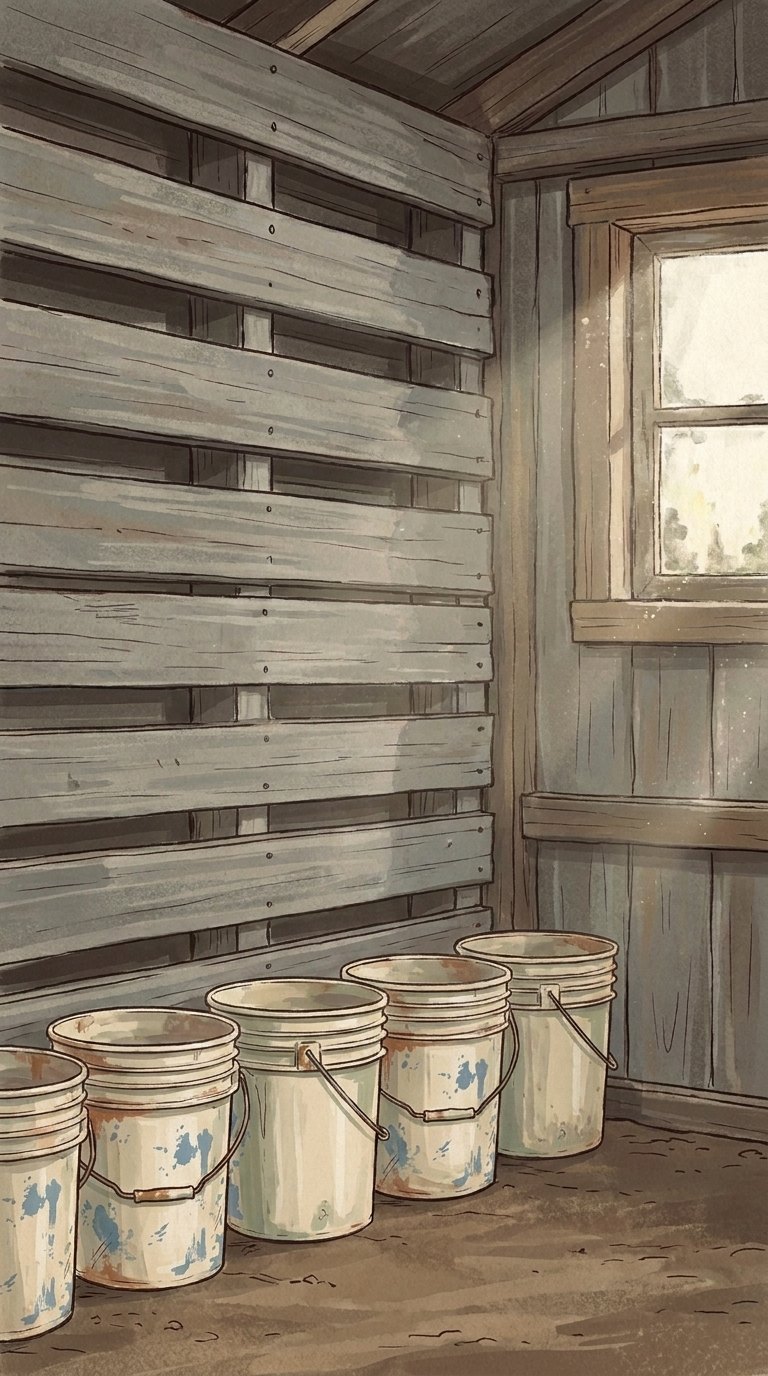
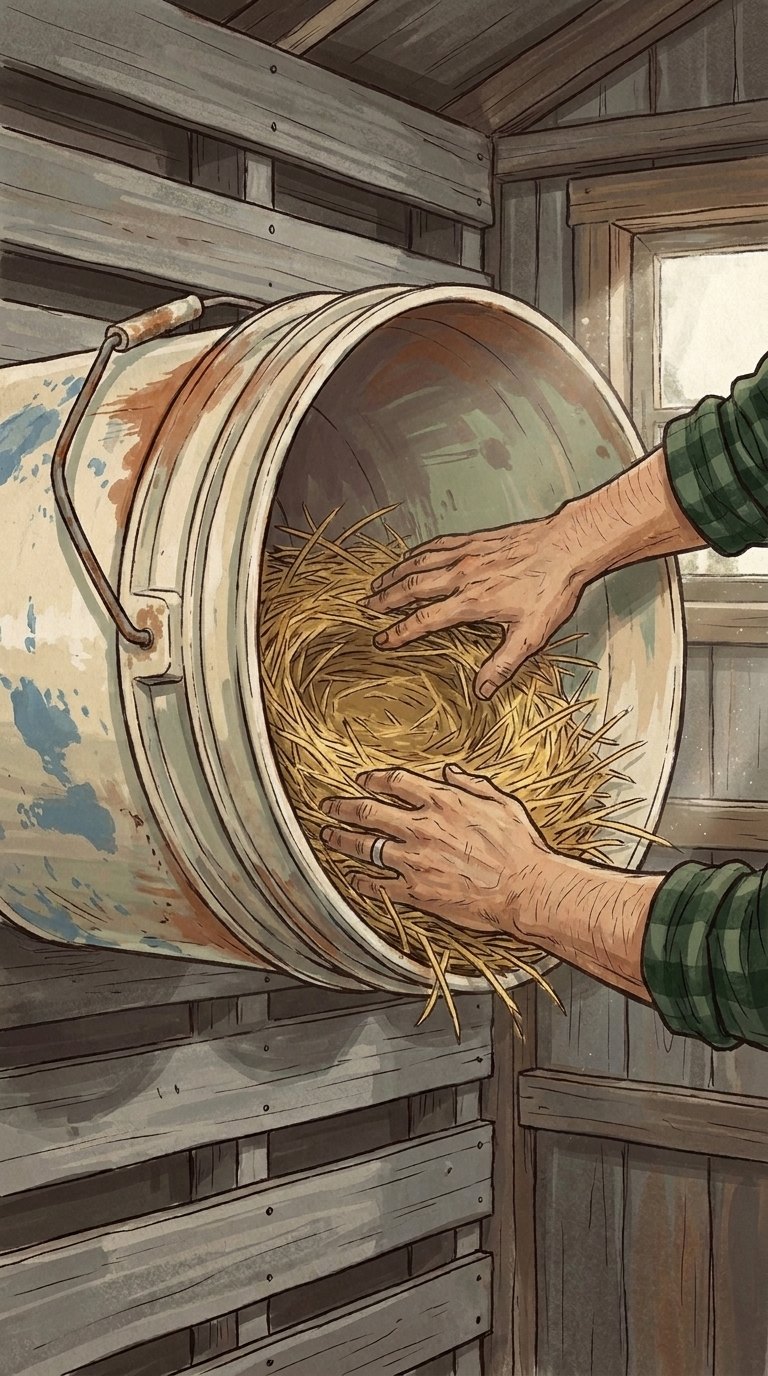
Five-gallon buckets that were headed for the dump, turned on their side and filled with straw. The hens move in the same afternoon.
Why hens like them
A hen looks for somewhere dim, snug and enclosed to lay — close quarters feel safe to her. A bucket on its side is exactly that: round, dark at the back, with one opening. It is also smooth plastic, so there are far fewer seams and corners for mites to live in than in a wooden box, and it wipes out in seconds.
None of this makes hens lay more. It makes them lay where you want them to, instead of behind the feed bin.
What you need
- Clean five-gallon buckets — one for every three or four hens
- Straw, wood shavings or dry leaves
- Screws and large washers (or fender washers), long enough to reach a stud or a board
- A board or pallet slat for a lip across the opening
- A drill for drainage holes
The steps
- Pick the right buckets. Food-grade only — bakery frosting, pickles, restaurant supplies. Never a bucket that held paint, solvent, driveway sealer or farm chemicals; the plastic holds the residue.
- Drill a few small drainage holes in the side that will sit lowest, so damp cannot collect under the bedding.
- Choose the spot: the darkest, quietest corner, about knee height, and below the roosting bars.
- Mount them so they cannot shift. Screw through the bucket into a stud or a board behind it, with large washers under the screw heads so they do not pull through the plastic. A wobbly box is a box a hen will refuse.
- Add a lip — a slat across the lower edge of the opening keeps the straw and the eggs in.
- Fill with straw and shape a round hollow in the middle, so an egg rolls to the centre instead of to the edge.
Honest warnings
- Below the roost, always. If a nest sits higher than the perch, hens will sleep in it, and a slept-in nest is a filthy nest.
- Food-grade buckets only. This is the one rule with no exceptions.
- Plastic scratches. Scratches hold grime, so a bucket that has been scrubbed for years eventually wants replacing — cheap, since the next one is free.
- Heat. Plastic in direct summer sun gets hot and airless. Keep the nests out of the sun and keep the coop ventilated.
- They will still share. Hens queue for one favourite box and ignore the rest. That is normal and not a sign you need more.
- Change the bedding regularly and scrub the buckets out — the whole point of plastic is that this takes a minute.
Where this project comes from
Keeping a few hens on a small lot is one chapter of The Self-Sufficient Backyard by Ron and Johanna Melchiore — a couple who have lived without a grid connection since the late 1970s and built three homesteads.
The book is a map of a whole quarter-acre: water, food, storage, animals, energy — with the pros and cons of each method they tried. It is not a set of engineering drawings, and we would rather you know that before buying.
What is on this page and what is in the book
| This page | The book |
|---|---|
| One project: nesting boxes from buckets | The whole coop question — housing, run, predators, winter, what they tried and what failed |
| Where hens lay | How a small flock fits into the rest of the yard: feed, scraps, manure, the garden |
| Written from public knowledge and our own reading | Forty years of two people actually living this way |