A cold frame from old windows
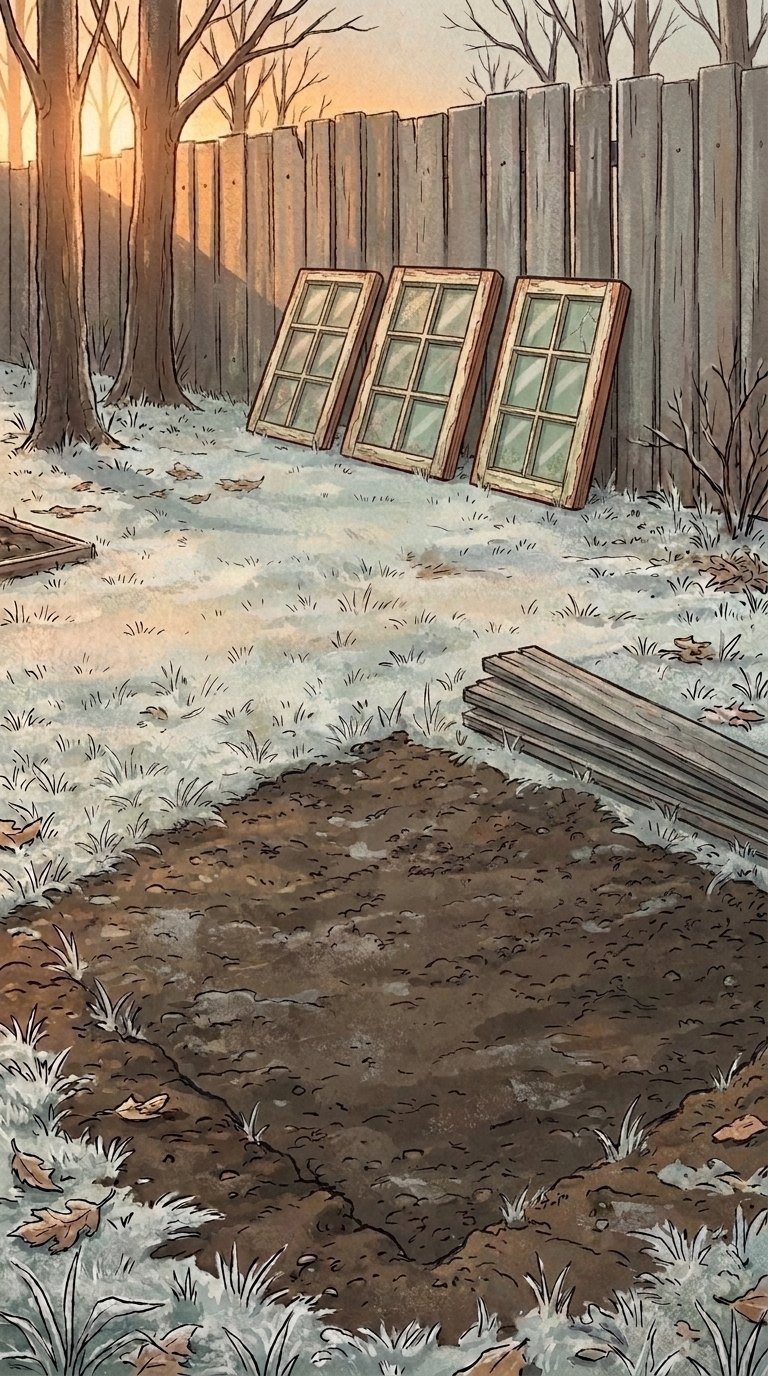
An old window sash, a box of scrap boards and a couple of hinges. It will not make you a greenhouse — it buys a few weeks at each end of the season, and that is usually the few weeks you want.
What it actually does
Glass lets the low sun in and holds the day's warmth after dark. The soil inside stays a few degrees above the open garden, and — just as important — the wind never touches the plants. That is enough to keep hardy greens going well past the first frosts, to start them again weeks earlier in spring, and to harden off seedlings before they go out.
It is not a greenhouse. Tomatoes will not survive the winter in it, and no cold frame will. What it changes is the edges of the season.
What you need
- An old wooden window sash with the glass intact
- Scrap boards for a bottomless box — pallet boards, fence boards, anything untreated
- Two or three hinges and screws
- A stick with notches cut in it, to prop the lid open at two heights
- A saw and a screwdriver
The steps
- Measure from the window, not from a plan. Build the box to fit the sash you have.
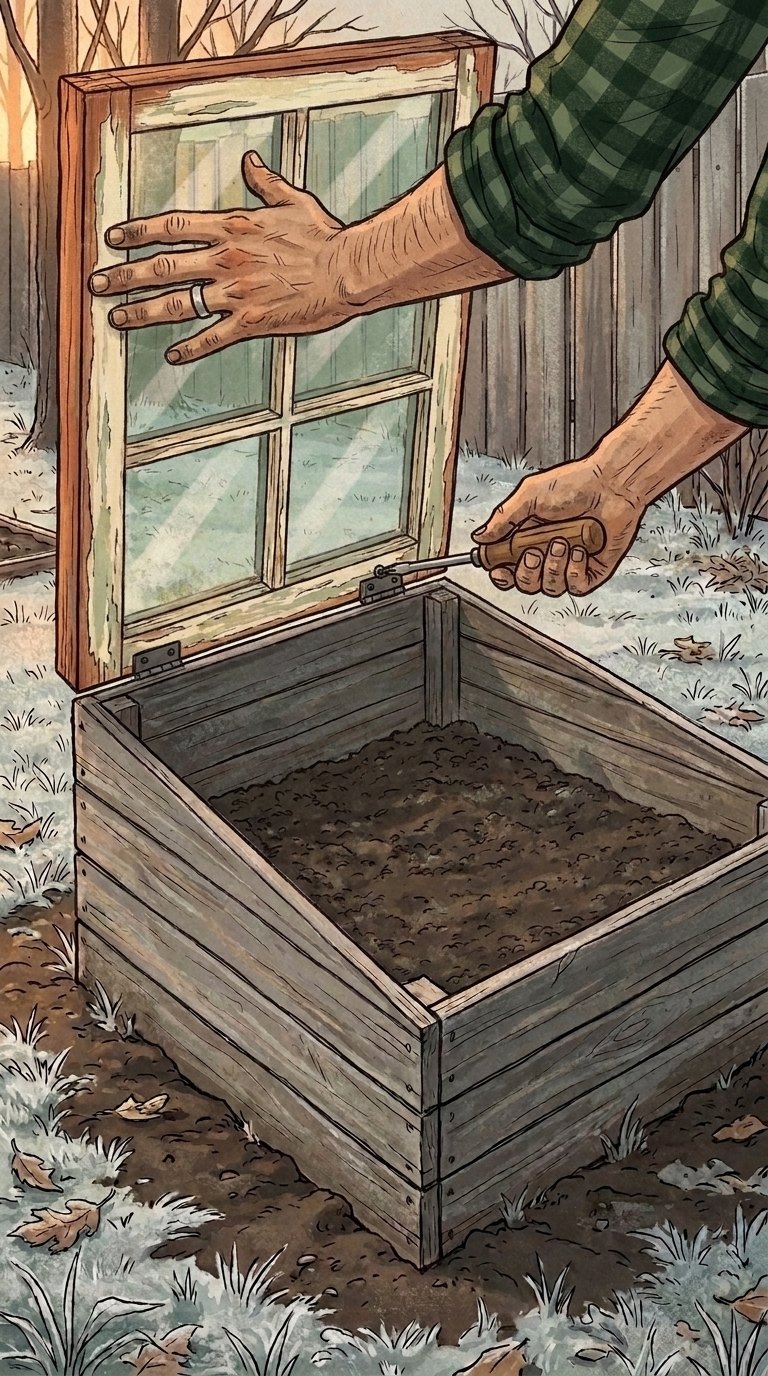
- Make the back wall higher than the front — a few inches is enough. Rain runs off instead of sitting on the glass, and the low winter sun strikes the pane more directly.
- Pick the spot: glass facing south, well-drained ground, ideally against a wall or a fence that blocks the north wind and gives back some warmth at night.
- Hinge the sash along the high back edge, two or three hinges, so the lid lifts upward and cannot slide off in wind.
- Cut a prop stick with two notches — one for a crack of air, one for a hot day.
- Bank soil or straw around the outside of the box so the wind cannot get underneath.
Honest warnings
- Heat kills more seedlings than cold. On a bright day the air under glass climbs fast, even when it is near freezing outside. Prop it open in the morning from about 18 °C / 65 °F, and close it before the sun goes off the garden.
- Old paint may contain lead. Window frames painted before 1978 often do. If the paint is flaking, strip and repaint it, or use a bare frame. This matters more than usual when food grows underneath.
- Single glass breaks. Hinge it properly, use the prop, and never let the lid slam. Where children or dogs come and go, use clear polycarbonate instead of glass.
- Not every plant. This is for hardy greens — lettuce, spinach, kale, mâche, radishes — and for hardening off seedlings. Not for tomatoes, peppers or anything frost-tender.
- Watch the water. Rain does not get in, so you have to. The soil under glass dries out quietly.
- Low ground floods. If water pools where you want to put it, move it. A cold frame with wet feet rots everything inside.
Where this project comes from
Cold frames are older than greenhouses and were standard equipment on market gardens long before plastic. The same design — a bottomless box, a sloped glazed lid, a prop stick — appears in old farm bulletins and in extension-service guides that are still published today.
What has changed is only the glass: people used purpose-made frames, and now there is a steady supply of old windows being replaced by double glazing.
How we research these projects