A rain barrel under the downspout
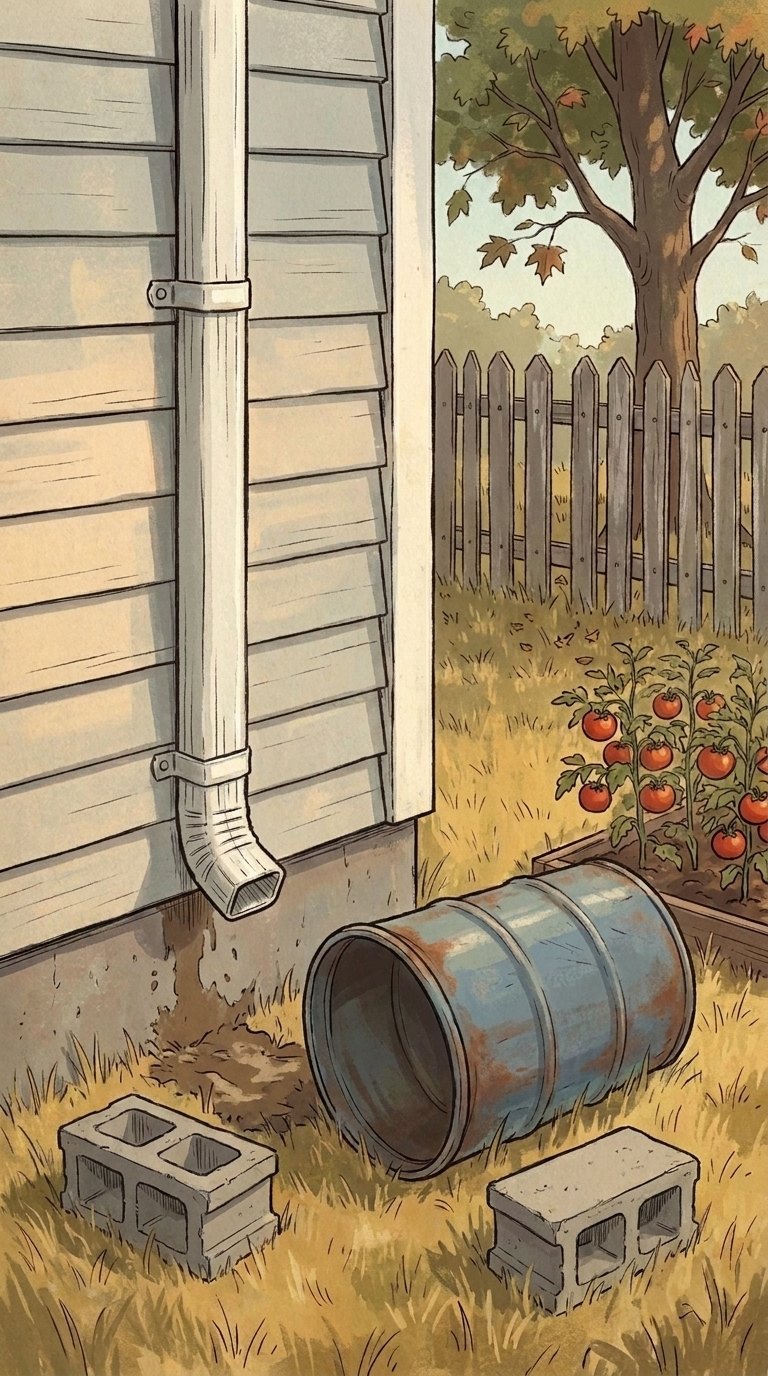
An old fifty-five gallon drum, two cinder blocks and a downspout elbow. Half an inch of rain off a small roof fills the whole barrel.
How much water you actually get
A roof catches more than people expect. An inch of rain falling on 1,000 square feet of roof is roughly 600 gallons; even the small section of roof feeding one downspout will fill a 55-gallon barrel from about half an inch of rain. The limit is not the sky, it is how much you can store — which is why the overflow matters as much as the barrel.
What it is good for: watering beds and borders between rains, topping up a greenhouse or cold frame, filling a watering can without dragging a hose out. What it will not do: carry a garden through a long drought.
What you need
- A clean food-grade 55-gallon drum — never one that held chemicals
- Two cinder blocks
- A downspout elbow and a hacksaw or tin snips
- Fine metal mesh screen, bigger than the opening
- A spigot or hose-bib kit with washers for inside and out
- A length of hose for the overflow
The steps
- Set the base first. Level two cinder blocks on firm ground under the downspout. A full barrel weighs about 460 pounds, and a base that settles will tip it.
- Fit the spigot low on the side, with washers inside and out so it seals. Low enough to drain the barrel, high enough to slip a watering can underneath.
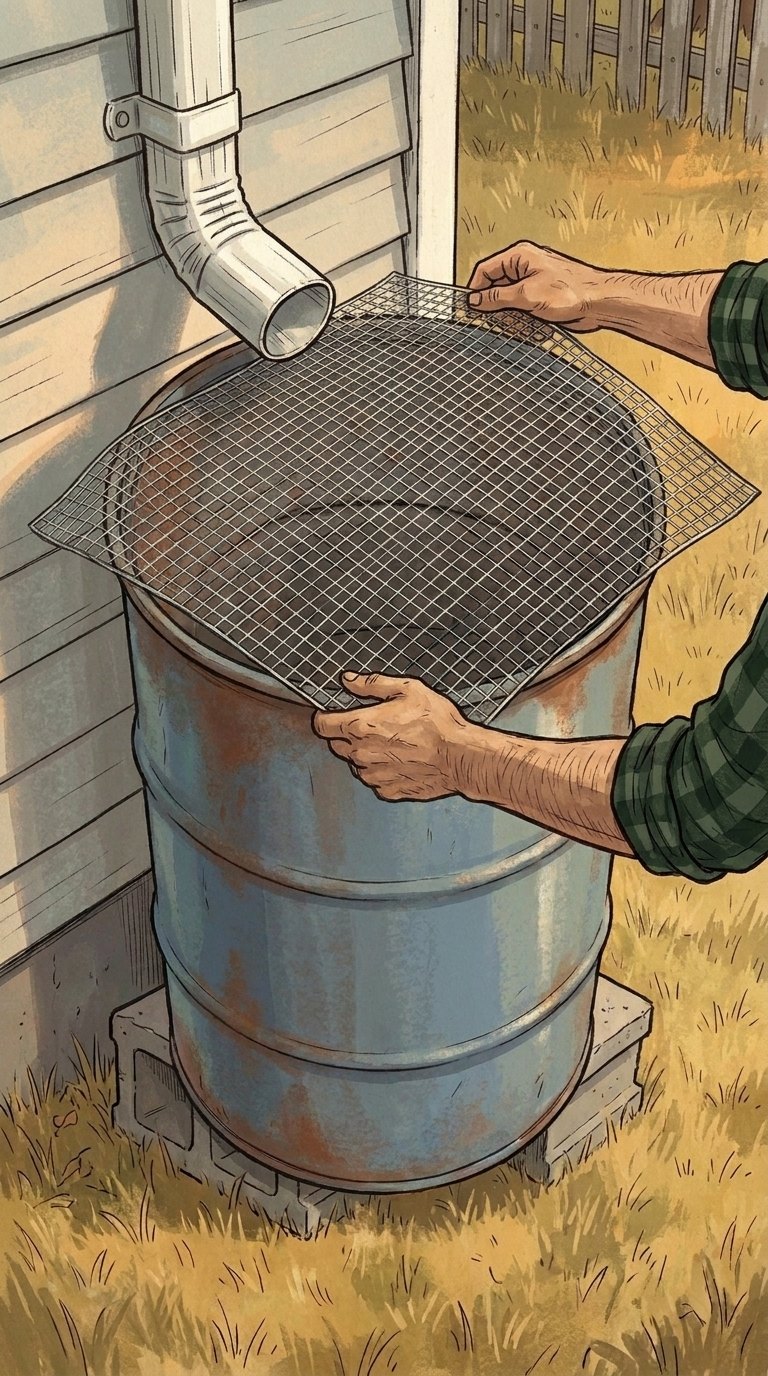
- Screen the opening. Stretch fine mesh across the open top so it overhangs the rim all round, and clamp it. This is the step people skip.
- Cut the downspout and turn an elbow into the screened opening. Leave the elbow above the screen, not through it, so leaves wash off instead of collecting inside.
- Fit an overflow near the top and run the hose six to ten feet away from the house, downhill.
Honest warnings
- Mosquitoes. An open barrel of still water is a nursery. Fine mesh over every opening is not optional; in hot weather add a Bti mosquito dunk, which is harmless to pets and birds.
- Send the overflow away from the house. Six to ten feet, downhill. Water against a foundation costs far more than any barrel saves.
- This is not drinking water. Roof runoff carries dust, bird droppings and grit off the shingles. Not for people, and not for topping up animal waterers.
- Water the soil, not the leaves you plan to eat. Pour at the base of the plant, and wash the harvest as usual.
- Drain it before winter. Ice splits plastic and pops spigots out. Disconnect, drain, and turn the barrel over or leave the lid off.
- Food-grade drums only. A barrel that held solvent or farm chemicals will keep releasing them.
- Check your state. Rainwater harvesting is legal in most of the US, but a few states set limits on how much you may store — Colorado, for example. One search settles it.
Where this project comes from
Cisterns and rain barrels were standard on farms long before mains water, and the old farm bulletins describe the same three concerns we list above: keep the water covered, keep it away from the building, and do not drink it.
What changed is the container. Food-grade plastic drums turn up constantly — from bakeries, car washes and food plants — and they are the cheapest clean barrel anyone has ever had.
How we research these projects