The trash can root cellar
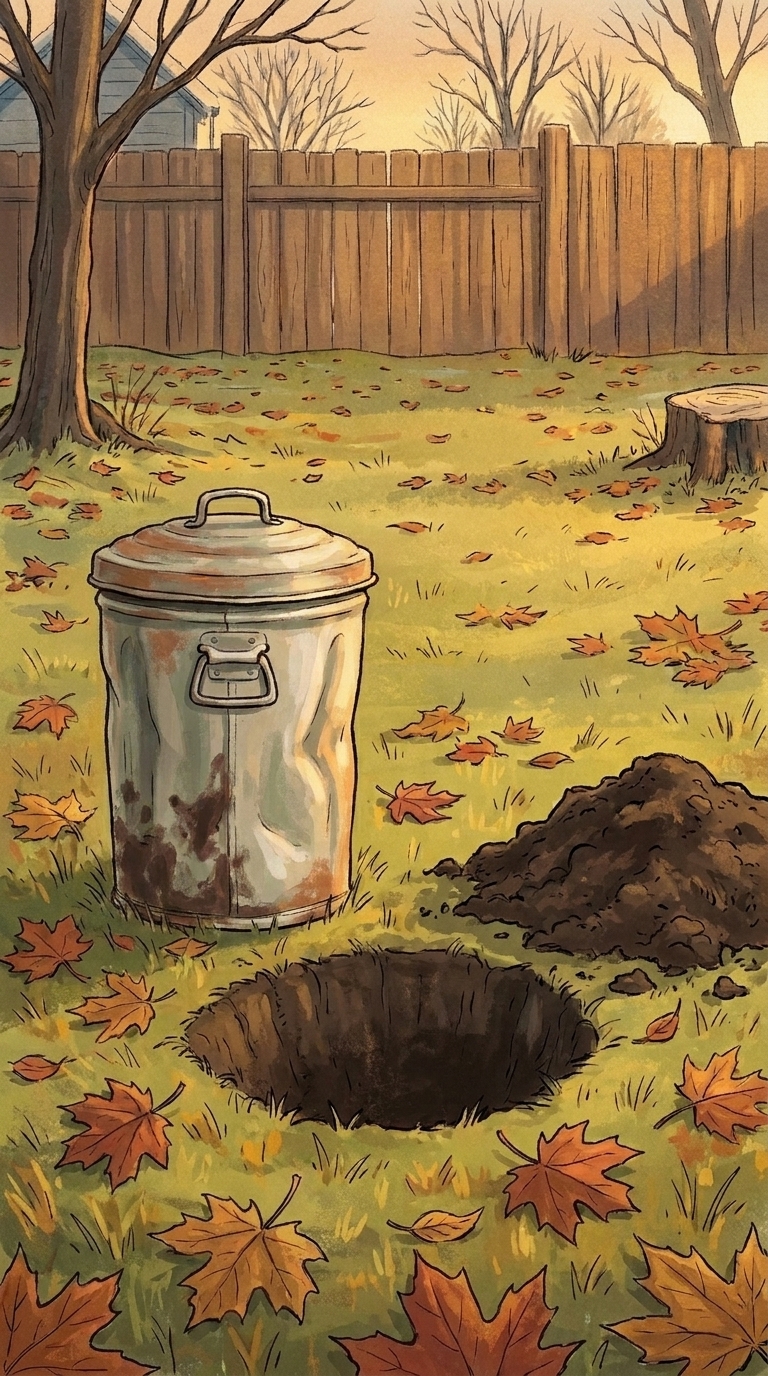
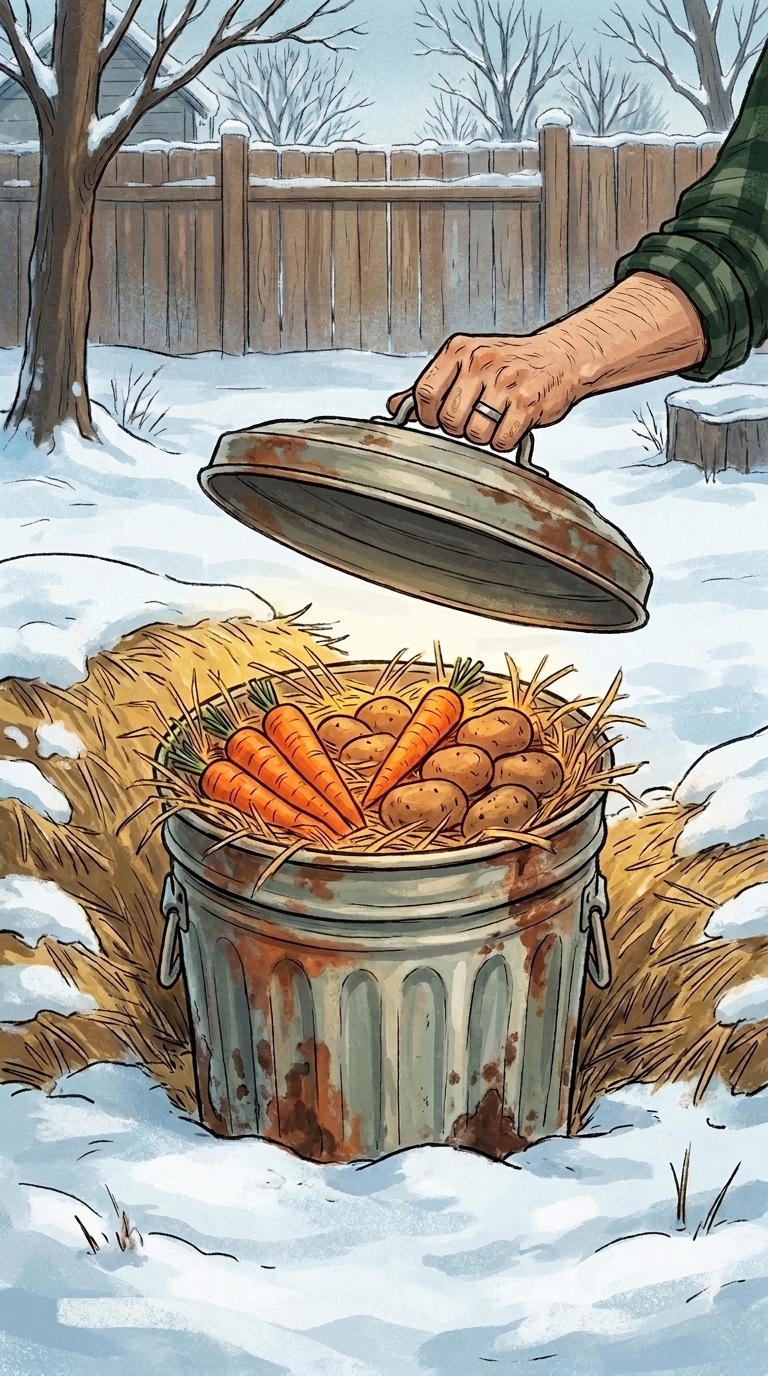
An old galvanized can, a hole in the ground and a layer of straw. That is the whole thing.
Why it works
A metre down, the ground holds a steady temperature — cold, but usually just above freezing. A can sunk to its rim sits in that steady layer. The straw around the vegetables slows temperature swings and keeps the roots from touching cold metal; the lid and a mound of soil keep the frost and the rain out.
This is how root crops were kept for generations before refrigerators, on a smaller scale than a walk-in cellar.
What you need
- A galvanized metal or sturdy plastic can with a tight lid (a clean, unused bin — never one that held chemicals or rubbish)
- A spade
- Straw, dry leaves or wood shavings
- A flat stone or a board to weigh the lid down
The steps
- Pick a spot. High ground that drains well, ideally on the shaded north side, away from downspouts and low points where water collects.
- Dig. Make the hole deep enough that the can sits with only its rim and lid above the surface.
- Set the can in and firm the soil around it so it cannot shift or float after heavy rain.
- Line it with straw — a thick layer on the bottom and up the sides.
- Pack the harvest in layers: straw, roots, straw, roots. Keep the vegetables from touching each other where you can.
- Close it with the lid, add a mound of straw or soil on top, and weigh it down with a stone.
Honest warnings
- Not for wet ground. If your water table is high or the spot puddles after rain, the can will flood and the harvest will rot.
- Open it on a cold, dry day and close it quickly — warm, damp air is what spoils a store.
- Check every couple of weeks. One soft potato spreads fast; take out anything that starts to go.
- Store roots only — carrots, beets, turnips, potatoes. Apples and onions want different conditions and will taint the rest.
- Rodents. A tight metal lid with weight on top is the whole defence; a loose lid is an invitation.
Where this project comes from
Burying a container to keep roots cool is one of the oldest storage methods there is. Versions of it appear in US farm bulletins from the first half of the last century, in extension-service storage guides, and in the practice of people who still keep a winter store without a cellar.
What changes between versions is the container and the climate — a barrel, a crate, a galvanized can — and that is why the warnings above matter more than the measurements.
How we research these projects