The trash can root cellar
An old galvanized can, a hole in the ground and a layer of straw. That is the whole thing.
Why it works
A metre down, the ground holds a steady temperature — cold, but usually just above freezing. A can sunk to its rim sits in that steady layer. The straw around the vegetables slows temperature swings and keeps the roots from touching cold metal; the lid and a mound of soil keep the frost and the rain out.
This is how root crops were kept for generations before refrigerators, on a smaller scale than a walk-in cellar.
What you need
- A galvanized metal or sturdy plastic can with a tight lid (a clean, unused bin — never one that held chemicals or rubbish)
- A spade
- Straw, dry leaves or wood shavings
- A flat stone or a board to weigh the lid down
The steps
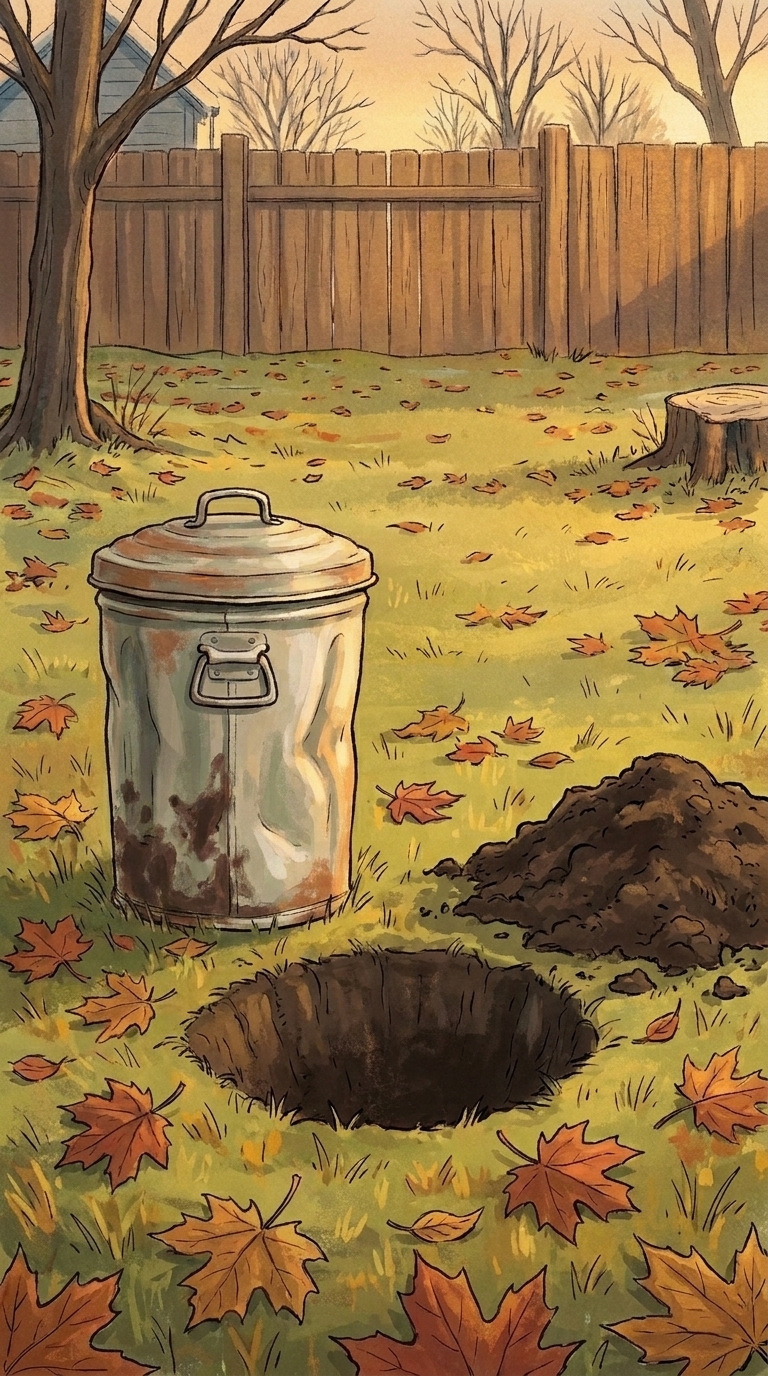
- Pick a spot. High ground that drains well, ideally on the shaded north side, away from downspouts and low points where water collects.
- Dig. Make the hole deep enough that the can sits with only its rim and lid above the surface.
- Set the can in and firm the soil around it so it cannot shift or float after heavy rain.
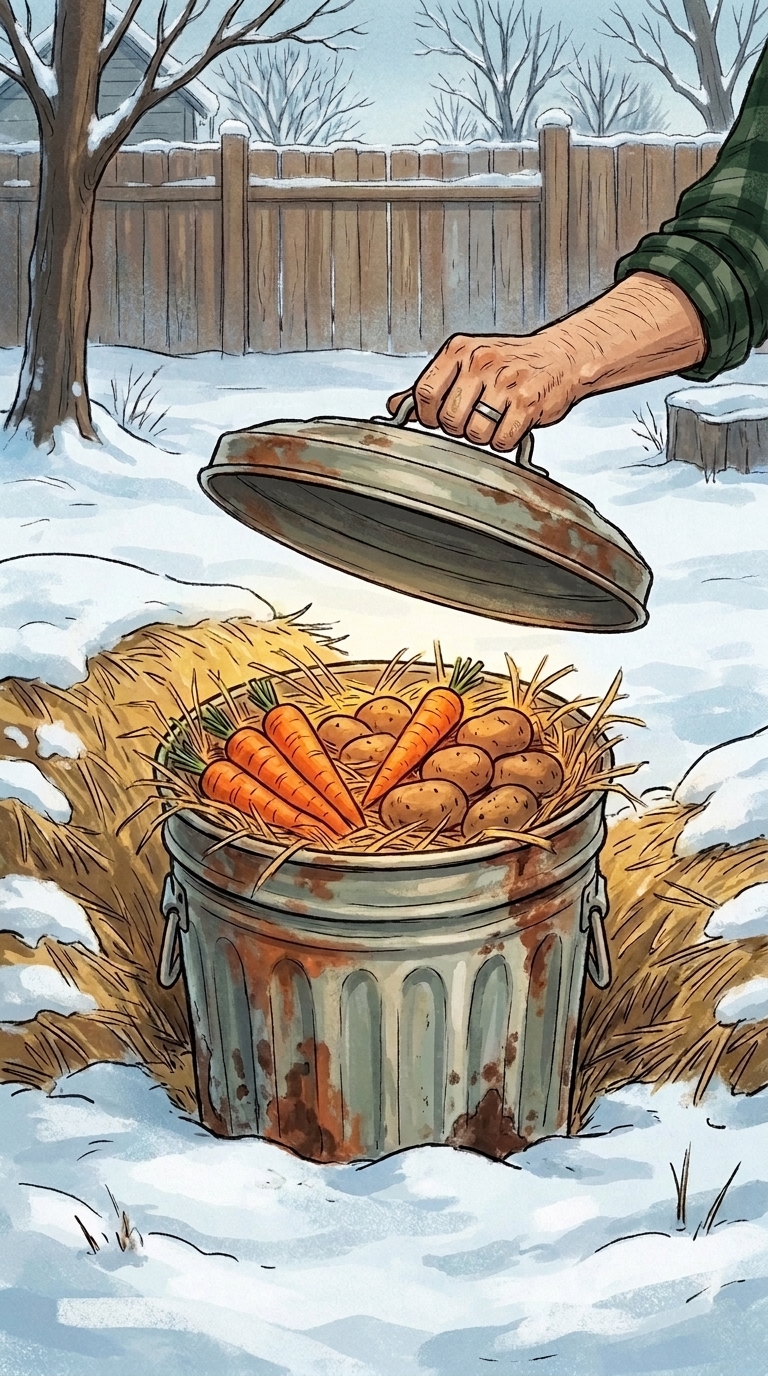
- Line it with straw — a thick layer on the bottom and up the sides.
- Pack the harvest in layers: straw, roots, straw, roots. Keep the vegetables from touching each other where you can.
- Close it with the lid, add a mound of straw or soil on top, and weigh it down with a stone.
Honest warnings
- Not for wet ground. If your water table is high or the spot puddles after rain, the can will flood and the harvest will rot.
- Open it on a cold, dry day and close it quickly — warm, damp air is what spoils a store.
- Check every couple of weeks. One soft potato spreads fast; take out anything that starts to go.
- Store roots only — carrots, beets, turnips, potatoes. Apples and onions want different conditions and will taint the rest.
- Rodents. A tight metal lid with weight on top is the whole defence; a loose lid is an invitation.
Where this project comes from
This is one of several root-cellar methods in The Self-Sufficient Backyard by Ron and Johanna Melchiore — a couple who have lived without a grid connection since the late 1970s and built three homesteads.
The book is a map of a whole quarter-acre: water, food, storage, animals, energy — with the pros and cons of each method they tried. It is not a set of engineering drawings, and we would rather you know that before buying.
What is in the video and what is in the book
| This page | The book |
|---|---|
| One project: the trash can cellar | Several kinds of root cellar, from a barrel to a walk-in, with the pros and cons of each |
| Storing roots for one winter | A plan for the whole quarter acre: water, food, storage, animals, energy — the authors put one person's food at about 1,020 square feet |
| Written from public knowledge and our own reading | Forty years of two people actually living this way, including the methods that failed |
Who it suits
- You have a yard, even a small one, and want to start somewhere sensible
- You would rather read one book than watch a hundred clips
- You are past the age of doing everything twice — the book has a chapter on gardening without wrecking your back
Who it does not suit
- You want exact cut lists and dimensions for one specific structure — buy a plan for that structure instead
- You have no outdoor space at all
- You already homestead full time — you will know most of it
It does not go into minute detail about each thing, but it covers a comprehensive range of topics and includes enough about each one that you know what to research further and how to ask intelligent questions. — a reader's review on the publisher's pageSee the book on the authors' site
Affiliate link. If you buy through it we earn a commission, at no extra cost to you. 60-day money-back guarantee from the seller.
First, read what is actually inside